.png)
The Hidden Cost of “We’re Too Busy to Train”
Most dealerships say it at some point: “We’re too busy to train right now.”
It sounds like the responsible thing to do is stay focused, push cars through, and keep up with the day.
But here’s the problem. When training gets delayed, the work doesn’t get easier. It gets more expensive. Not because your people don’t care. Because without a shared standard, the store runs on inconsistency.
And inconsistency always costs you time, money, and customers.
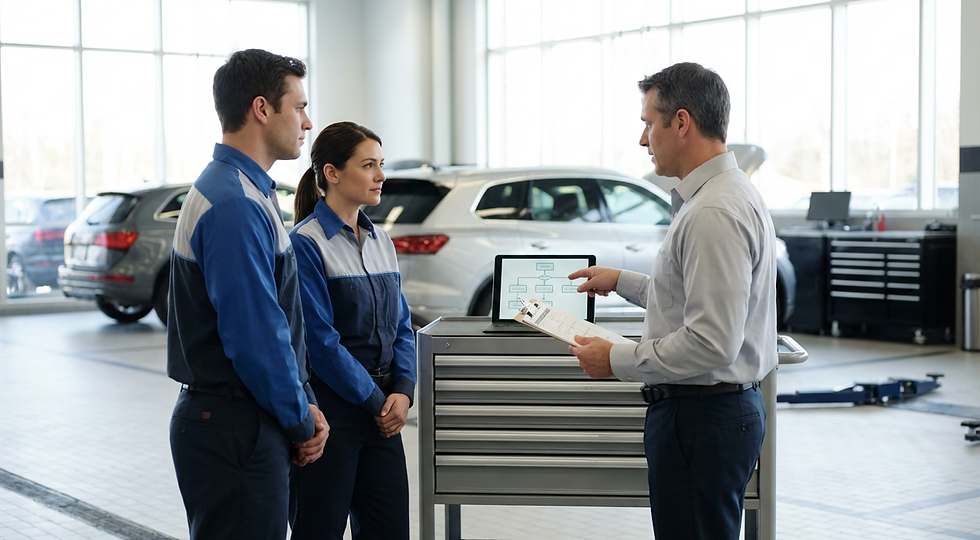
The hidden costs you feel every day (even if you don’t measure them)
1) Lost revenue that never shows up on a report
This is the quiet loss.
It looks like:
maintenance that gets mentioned but not presented well
declined work that never gets re-presented
customers leaving unsure of the value
The fix isn’t “try harder.”
It’s training a repeatable flow for how recommendations are identified, explained, and followed up.
2) Rework that steals throughput
Untrained or inconsistently trained teams don’t stay neutral.
They drift.
And drift creates:
avoidable mistakes
miscommunication
delays
comebacks (not the good kind)
That doesn’t just frustrate your team.
It slows the lane down and reduces how much work your department can complete in a day.

3) Burnout in your best people
When standards aren’t clear, the same few people carry everything.
Your top advisor covers gaps.
Your best tech fixes what should’ve been prevented.
Managers constantly step in to keep the day from falling apart.
Over time, your strongest people start to feel like the store depends on them too much.
That’s where burnout and turnover show up.
The hopeful part is this: it doesn’t have to stay that way.
Training spreads capability across the team, so success isn’t limited to a few high performers.
4) A customer experience that changes depending on who they get
Customers don’t need perfection.
They need consistency.
But when the service process changes from advisor to advisor, visits feel unpredictable.
Unpredictable leads to lower trust.
And lower trust leads to:
fewer approvals
fewer return visits (the good kind)
Training creates a shared experience your customers can count on.
The takeaway
“Too busy to train” feels like a short-term win.
But it creates long-term drag.
The good news is that improvement doesn’t require a full reset.
It requires consistent training on the few behaviors that matter most.
That’s how you:
reduce rework
increase throughput
build customer trust
protect your best people
Being too busy doesn’t mean training can wait. It means training can’t.


Comments